Program
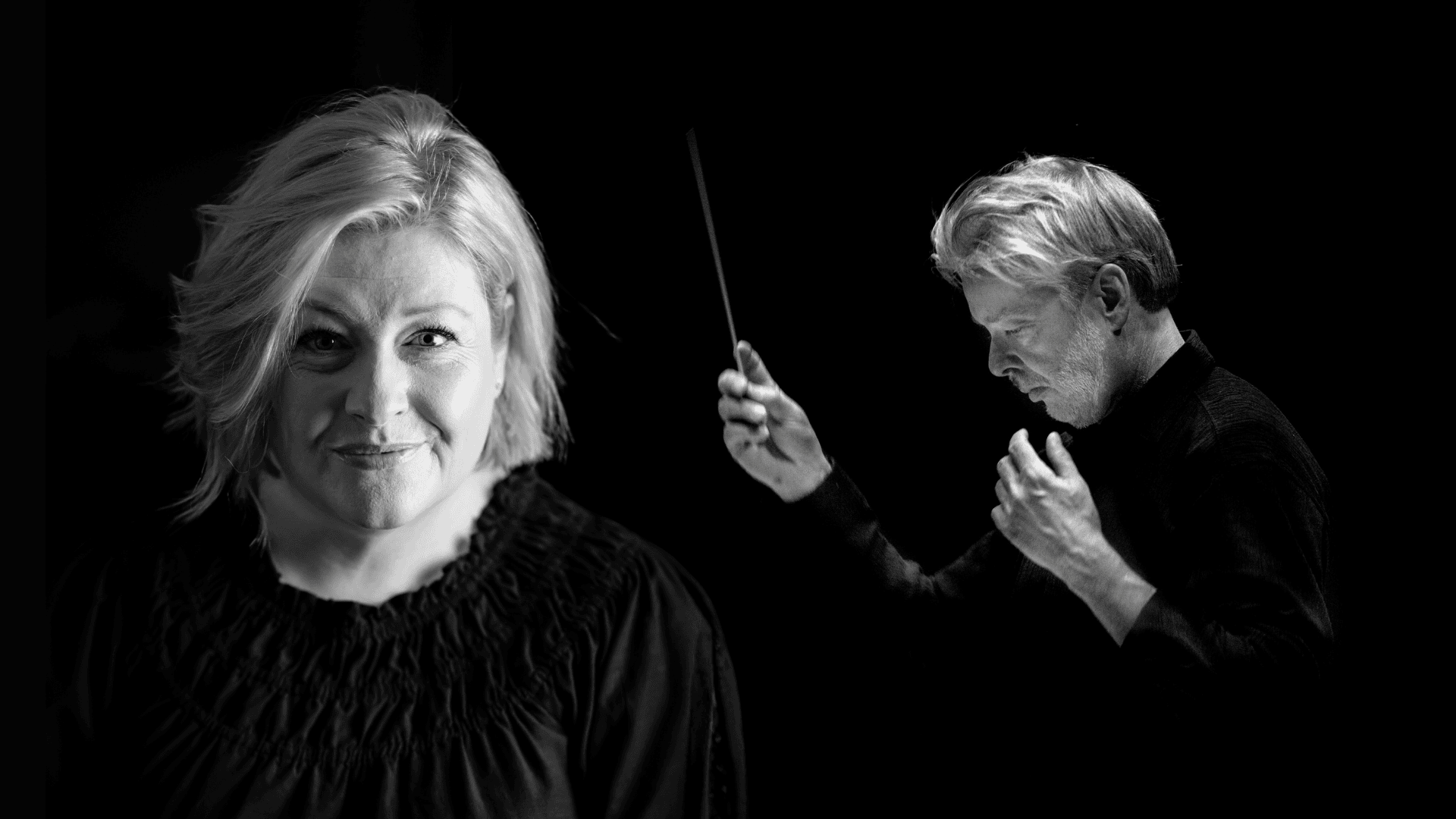
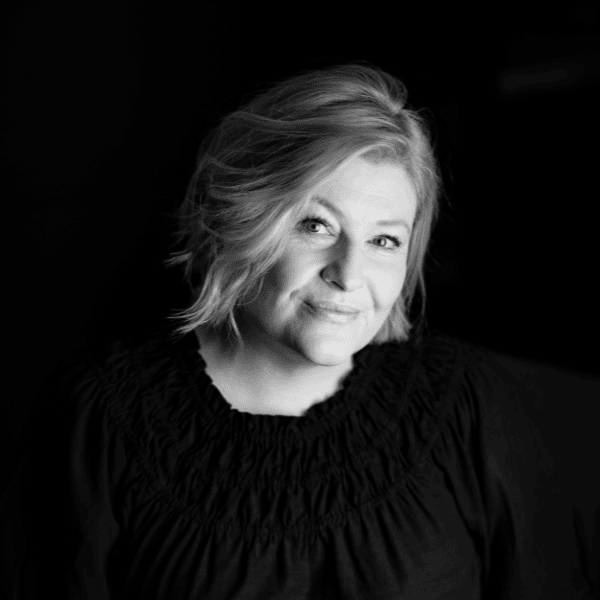
Karen Cargill, mezzosoprano
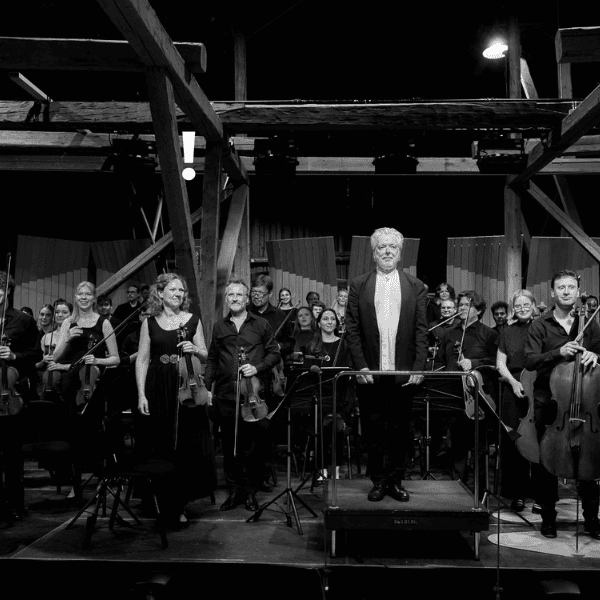
Fiskars Festival Orchestra
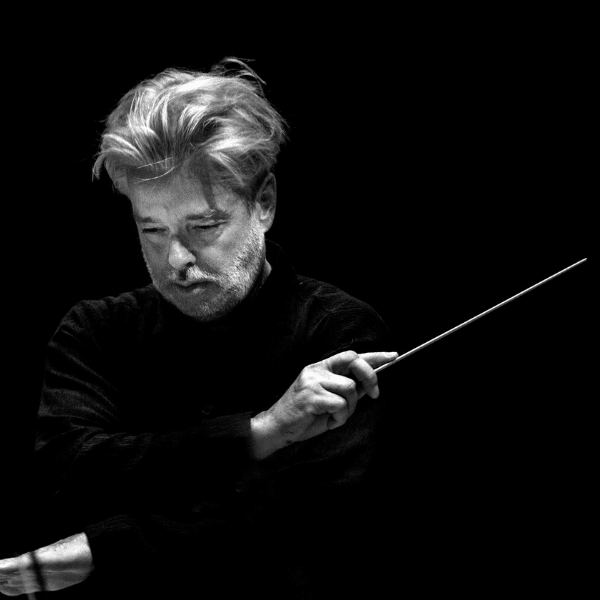
Jukka-Pekka Saraste, conductor
Nina Haug, A young conductor from LEAD! Foundation Finland Master Class 2026
LUDWIG VAN BEETHOVEN (1770–1827):
Overture to the play Egmont, op. 84
RICHARD WAGNER (1813–1883):
Five songs for female voice to Mathilde Wesendonck’s poetry
(songs 1–4 arr. Felix Mottl)
Der Engel
Stehe Still
Im Treibhaus
Schmerzen
Träume
OUTI TARKIAINEN (1985–):
The Ring of Fire and Love (2020)
INTERMISSION
ANTONÍN DVOŘÁK (1841–1904):
Symphony No. 7 D minor, Op. 70
1. Allegro maestoso
2. Poco adagio
3. Scherzo: Vivace – Poco meno mosso
4. Finale: Allegro
Ticket 59 | 54 | 34 €
Duration 2 h, 1 intermission
TMF offers you an evening where classical music masterpieces meet storytelling and top-class performances. Conducted by Jukka-Pekka Saraste, mezzo-soprano Karen Cargill and the Fiskars Festival Orchestra will create a thrilling experience at the Turku Concert Hall. The young conductor of the LEAD! Foundation master class 2026 Nina Haug will conduct Beethoven’s Egmont Overture, opening the concert.
The dramatic arc of the Egmont Overture leads from the shadows of struggle towards the light of victory.
The dramatic arc of Egmont Overture takes us from the shadows of battle to the light of victory. This is followed by Wagner’s Wesendonck Lieder, an intimate and emotional song cycle featuring harmonic experiments that foreshadow the world of Tristan. Outi Tarkiainen’s The Ring of Fire and Love depicts the transformative power of life through themes of nature and humanity characteristic of the composer. The evening concludes with Dvořák’s Symphony No. 7, a symphonic masterpiece full of dark tones, passion, and heroic power.
The evening as a whole builds a strong emotional arc: from Beethoven’s dramatic tension to Wagner’s sensitivity and inner longing. The energetic and life-affirming power of Tarkiainen’s work is stirring, and Dvořák’s symphony lifts us towards light and a liberating climax. The atmosphere is intense, glowing and deeply human.
This concert offers you a unique journey into the world of four composers, from the classics to the present day. The orchestra conducted by Saraste and Cargill’s expressive voice are sure to make the evening an experience that offers something for everyone. Seize the opportunity and let the music carry you away.
Introduction of works
Ludwig van Beethoven was not known for bowing down to those around him, but there was at least one person who enjoyed his great respect: Johann Wolfgang von Goethe. The giant of German literature had fascinated Beethoven since childhood, and after his first opera, Fidelio, he planned to stage Goethe’s magnum opus, Faust. The Faust opera never came to fruition, but the Vienna Court Theater programmed Goethe’s historical play Egmont, set in 16th-century Holland, for the 1801 season.
He was clearly pleased with his achievement, as he wrote to Goethe, who was twenty years his senior: “I have composed a piece of music for the theater. He was clearly pleased with his achievement, writing to Goethe, who was twenty years his senior: “You will soon receive my music for Egmont, the divine Egmont, which I have reconsidered through you and set to music with the same fervent feelings as when I read it – I would very much like to hear your opinion of my music for Egmont. Even your criticism is useful to me and my art and will be received with the same joy as the highest praise.”
Theatre music rarely appears in concert programs, but the dramatic overture has remained a favorite in orchestral literature. The sarabande rhythm at the beginning is said to represent the cruel Duke of Alba, who oppresses Count Egmont. Stormy twists and turns lead to Egmont’s death, but the end of the overture is dominated by a jubilant celebration of martyrdom’s victory over tyranny.
Goethe was known to be fond of Beethoven’s incidental music, but the collaboration between the two men did not deepen. Their chemistry did not match, as illustrated by the well-known story of Beethoven and Goethe’s walk in the spa town of Teplice. The Empress and her entourage came towards them, causing the poet to bow to the nobility, while the composer stubbornly kept walking. Beethoven bowed to art, but not to royalty.
During his mature period, Richard Wagner composed music only to texts he had written himself – with one exception. In the 1850s, while in exile in Zurich, Switzerland, following the aftermath of the 1849 uprising in Dresden, he met the young wife of his host, Otto Wesendonck, Mathilde.
Mathilde Wesendonck admired Wagner, while Wagner saw her as a soul mate whom he felt closer to than his wife Minna. He composed five of Mathilde’s symbolic and philosophical poems for female voice and piano, about which he wrote in a letter to Mathilde in 1858: “I have never written anything better than these songs.”
Two of the songs – Im Treibhaus (In the Greenhouse) and Träume (Dreams) – were described as “a rehearsal for Tristan and Isolde,” revealing for the first time the bold harmonic experiments of the grand opera that was brewing in the composer’s mind. The songs were published in 1862, and Felix Mottl, known as a Wagner conductor, arranged them for orchestra in 1893.
The Wesendonck Lieder truly represent the peak of Wagner’s production and a turning point towards something new. Der Engel (The Angel) paints a picture of heavenly peace, while Stehe still! (Stand still!) restlessly asks time to stop, if only for a moment.
Im Treibhaus laments the fate of plants brought from afar and compares them to the writer’s own inexplicable longing. Some of the music ended up in the third act of Tristan und Isolde. Tristan’s suffering is also present in the song Schmerzen (Pains). Liberation comes only with the serene Träume, which the composer himself orchestrated as a 30th birthday serenade for Mathilde on December 23, 1858 – while Otto Wesendonck was conveniently away on a business trip to America.
Outi Tarkiainen has rapidly risen to become one of the most performed Finnish composers in the world. Her colorful works emphasize extra-musical themes, particularly Finnish nature and the experience of motherhood, which is also explored in her orchestral work The Ring of Fire and Love. The composer writes of her work:
“The Ring of Fire is a volcanic zone encircling the Pacific Ocean, where most of the world’s earthquakes occur. On the other hand, the term also refers to a light phenomenon, namely the ring of fire that forms around the sun when the moon eclipses its center. However, the same term is also used to describe a woman’s sensation when the baby’s head is passing through her pelvis during childbirth. That moment is the most dangerous in the baby’s life, when enormous pressure squeezes the small skull, preparing it for a life that cannot be replaced by anything else.
The Ring of Fire And Love is an orchestral work about this earth-shattering, creative, and revolutionary force that they go through together. The work was commissioned by the Royal Stockholm Philharmonic Orchestra, and its sinfonietta version by the Jyväskylä Sinfonia and Kymi Sinfonietta.
Antonín Dvořák was a highly regarded up-and-coming composer when, in the fall of 1884, the Royal Philharmonic Society commissioned him to write a symphony. Dvořák had recently heard his friend and supporter Johannes Brahms’s Third Symphony, which served as inspiration for the new work. The composer said that he got the idea for the main theme of the first movement while at the Prague train station, watching his compatriots on their way to a concert supporting Czech national identity.
Dvořák wrote to a friend: “I am now working hard on a symphony for London, and I can think of nothing else wherever I go. May God grant that this Czech music change the world!” He considered the final movement to be a depiction of the Czech people’s ability to resist their political oppressors. The premiere, conducted by the composer himself in April 1885 at St. James’s Hall in London, was a great success, and a performance conducted by Hans von Bülow in Berlin four years later ensured the work’s popularity in the German-speaking world as well.
In terms of style, Symphony No. 7 in D minor is perhaps the least Czech of Dvořák’s symphonies from his mature period: Brahms’ influence is particularly evident in the first Allegro maestoso movement and its secondary theme. With its serious mood at the beginning, the work contrasts with its predecessor, Symphony No. 6 in D major.
In the second movement, national romantic influences come to the fore. In his musical notes, Dvořák wrote the description “From sad times,” perhaps referring to the recent death of his mother and the earlier deaths of his three small children. The scherzo movement returns to dance with the rhythms of the Czech furiant dance and is counterbalanced by the pastoral trio section. In the finale, Dvořák once again shows himself to be the heir to Brahms and Beethoven, bringing the music to a conclusion through heroic twists and turns.
Lauri Mäntysaari
Event's artists
INFO
- Address: Aninkaistenkatu 9, 20100 Turku
- Public Transport: All stops at the city centre are nearby. The bus terminal is nearby and Turku main railway station approx. 1 km away.
- Accessibility: Accessible parking (2 spots) on Sibeliuksenkatu. Temporary stopping for dropping off passengers is allowed in front of the main entrance on Aninkaistenkatu. The main entrance is accessible.
- Parking: Parking areas at the city centre. Puutori car park is recommended.