Program
Aili Järvelä, singing
Laura Hynninen, harp
Sami Koskela, percussions
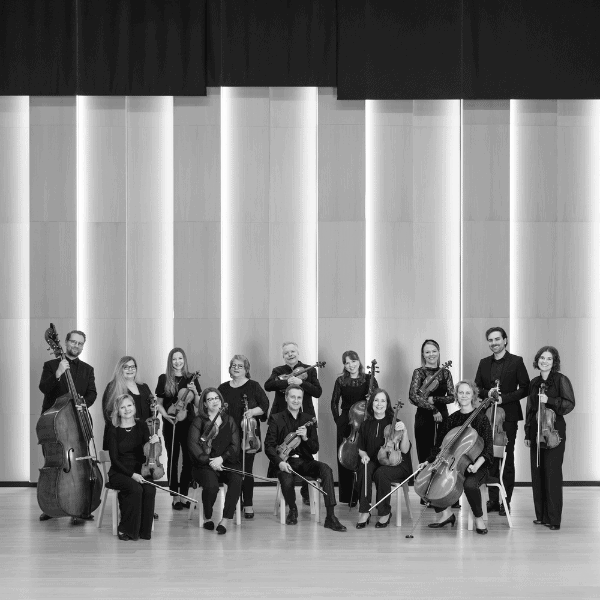
Ostrobothnian Chamber Orchestra
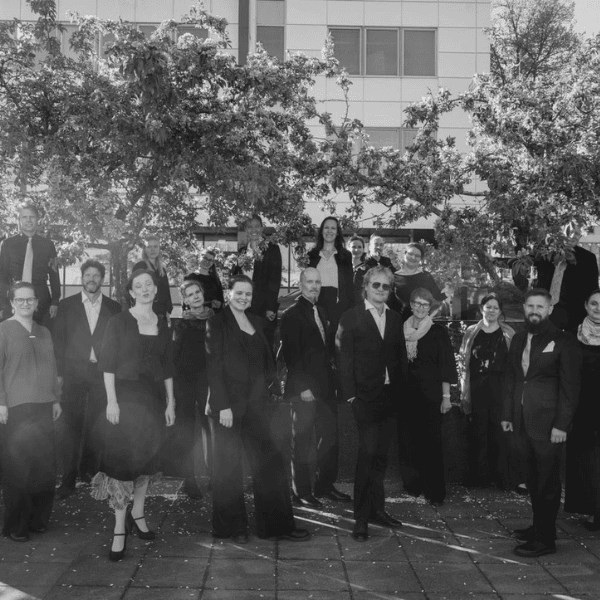
Turku Conservatory Chamber Choir
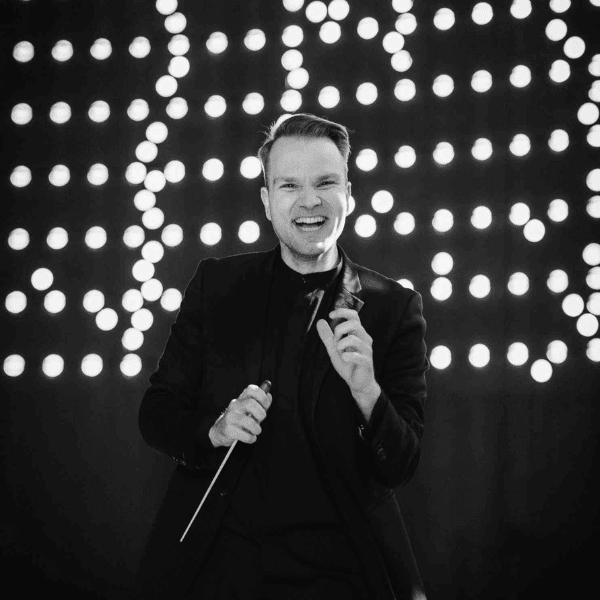
Kaapo Ijas, conductor
KJARTAN SVEINSSON (1978–):
Der Klang der Offenbarung des Göttlichen (2014)
1. Teil I
2. Teil II
3. Teil III
4. Teil IV
INTERMISSION
AILI JÄRVELÄ (1985–):
VUORI (2025)
1. Sydämenpuolikas
2. Mänty
3. Majakka
4. Jättiläinen
5. Ilman sua
6. Plasebo
7. Apollo
8. Roihuvuori
Tickets 59 | 54 | 34 €
Duration 2 h, 1 intermission
Hear how the mountains of Iceland and Finland meet! The works of two powerful voices in contemporary music, Iceland’s Kjartan Sveinsson and Finland’s Aili Järvelä, will be performed side by side by the Ostrobothnian Chamber Orchestra. The evening’s concert will feature Sveinsson’s dramatic work Der Klang der Offenbarung des Göttlichen (The Sound of Divine Revelation) and Järvelä’s beautiful and powerful VUORI (Mountain). The concert will be conducted by Kaapo Ijas.
Sveinsson’s work is a four-part “opera without a stage,” created in collaboration with artist Ragnar Kjartansson. It is based on Halldór Laxness’s novel World Light and combines choral singing, orchestration, and soundscape in a way that is both romantic and experimental. To the general public, Sveinsson is better known from the band Sigur Rós. Järvelä’s VUORI, on the other hand, is a new solo album in which her compositions and lyrics are combined with the sounds of the Ostrobothnian Chamber Orchestra, Laura Hynninen’s harp, and Samuli Kosminen’s percussion. Järvelä has composed, written the lyrics, arranged and produced the songs herself, making the whole a personal work, full of nature and inner landscapes.
The first half of the concert creates a space without actors; the music and choir carry the entire story. The soundscape of the work moves between steady tones, harmonies raised by the choir, and subtle orchestral ensembles, and in the last part, the power bursts forth toward a pure sense of survival and revelation. The second half of the concert, on the other hand, conveys an intimate, delicate power. Järvelä’s voice, the violin, and the warm sound of the orchestra create an experience that feels like a journey toward an inner mountain peak. The texts and compositions build a story of growth, longing, and hope.
This evening offers a glimpse into the worlds of two composers: Sveinsson provides a profound, almost hypnotic theatrical experience without a stage, while Järvelä creates an intimate, lyrical mountain landscape through the power of music and words. The evening forms a coherent, impressive whole that leaves the listener pondering the meanings of beauty, revelation, and inner growth.
Introduction of works
Kjartan Sveinsson is best known for his work with Icelandic post-rock band Sigur Rós. As the band’s keyboardist and skilled multi-instrumentalist, playing instruments such as the tin whistle and oboe, Kjartan has also composed many of the orchestral arrangements that characterize the band’s sound.
In 2013, Kjartan and Sigur Rós parted ways as he focused on a new project with Icelandic multimedia artist Ragnar Kjartansson. The result was a “four-act opera” entitled Der Klang der Offenbarung des Göttlichen (The Sound of the Revelation of the Divine). The opera is unusual in that there are no performers on stage, only landscape images accompanied by a string orchestra and a choir singing poems from Icelandic author Halldór Laxness’s work The Light of the World, translated into German.
There is something enchantingly soothing about the slow-paced music. In the first part (Teil I – the parts are named only according to their numerical order), only the string orchestra is heard. In the second part, the choir joins in, singing a peaceful hymn to a deceased loved one. In the third part, we rejoice at the arrival of a loved one in the middle of a cold winter.
The fourth part is slightly longer than the others. A wordless soprano solo leads us to an experience of enlightenment: “Du bist das Licht der Welt” – “You are the light of the world.” The bass note of the cellos plays in the background throughout the movement, only quietening with the final statement: “Allein herrschen die Schönheit wird” – “Beauty alone reigns.”
Singer-songwriter Aili Järvelä’s roots lie in the folk music of Kaustinen, so the Ostrobothnian Chamber Orchestra seemed a natural partner for the new album. Before any of the songs had even been composed, Järvelä contacted the orchestra, harpist Laura Hynninen, percussionist Samuli Kosminen, and Pekka Kuusisto, who agreed to produce the VUORI album. The result is a rare album that truly reflects its soloist, with Järvelä himself responsible not only for the compositions and lyrics, but also for the arrangements.
VUORI is Järvelä’s third solo album, which, like the previous ones, she has produced himself. Artistic freedom has paved the way for independent narratives, such as Sydämenpuolikas (Half a heart), which explores the pain of a relationship that has ended. Mänty (Pine tree) was inspired by a quote from supermodel Saimi Hoyer: “A storm doesn’t knock down a pine tree, it just bends it a little.” Majakka (Lighthouse) intoxicates with its hypnotic harp strumming, Jättiläinen (Giant) with its growing chords.
Ilman sua (Without You) is a sensitive and intimate love song, in which Plasebo expresses a wish: help me feel something now! Apollo is preceded by an excerpt from Eino Leino’s classic poem Hymyilevä Apollo (Smiling Apollo). The album concludes with a string orchestra version of Aili Järvelä’s touching favorite song Roihuvuori.
When Helsingin Sanomat asked its readers in the summer of 2021 to choose their favorite lyrics of the 2000s, Roihuvuori immediately rose to the top 50 songs. The song, which tells of a journey to visit a former partner, masterfully sums up observations about life in a few lines: “Otatko kahvia vai teetä / mä oisin halunnut vaan sut” (Will you have coffee or tea / I just wanted you). Many of the new songs on the VUORI album are likely to leave a similar impression on listeners.
Lauri Mäntysaari
Event's artists


INFO
- Address: Aninkaistenkatu 9, 20100 Turku
- Public Transport: All stops at the city centre are nearby. The bus terminal is nearby and Turku main railway station approx. 1 km away.
- Accessibility: Accessible parking (2 spots) on Sibeliuksenkatu. Temporary stopping for dropping off passengers is allowed in front of the main entrance on Aninkaistenkatu. The main entrance is accessible.
- Parking: Parking areas at the city centre. Puutori car park is recommended.