Program
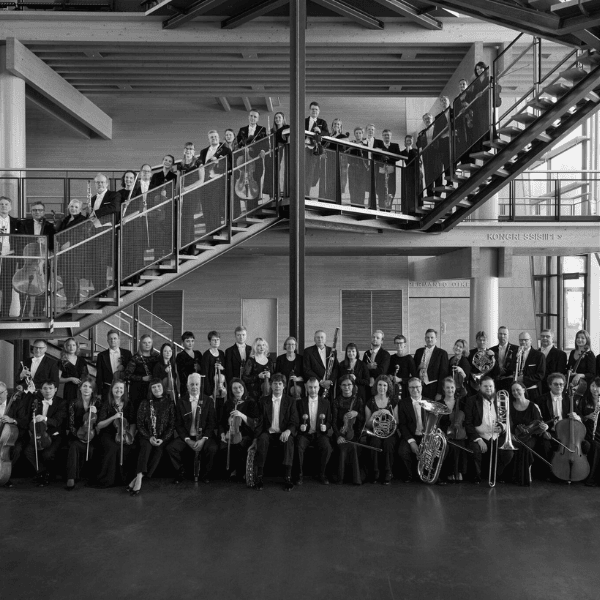
Lahti Symphony Orchestra
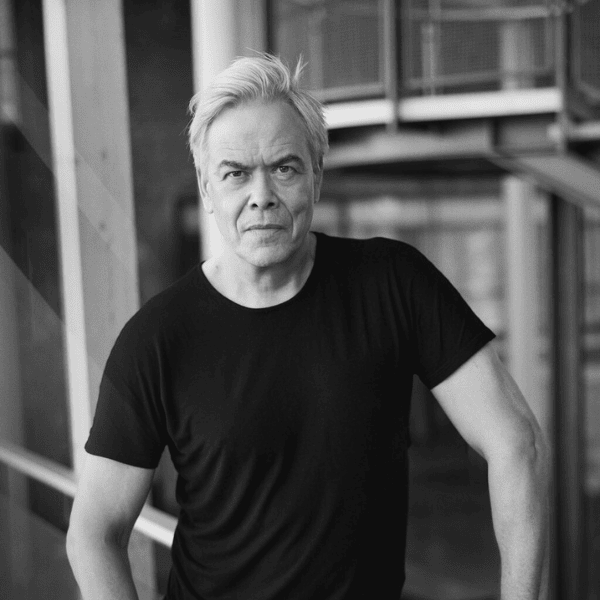
Hannu Lintu, conductor
EINOJUHANI RAUTAVAARA (1928–2016):
Angels and Visitations (1978)
JEAN SIBELIUS (1865–1957):
Musik to the play Death
Scene with Cranes op. 44/2
Canzonetta op. 62a
Valse Triste op. op. 44/1
INTERMISSION
JEAN SIBELIUS:
Symphony No. 2, Op. 43
1. Allegretto moderato
2. Tempo andante, ma rubato
3. Vivacissimo
4. Allegro moderato
JEAN SIBELIUS:
Finlandia, Op. 26
Tickets 59 | 54 | 34 €
Duration 2 h, 1 intermission
TMF, Sinfonia Lahti, and Hannu Lintu invite you to a concert where the essence of Finnish orchestral music is revealed in all its glory. The evening’s program features some of Sibelius’s most beloved works and Rautavaara’s mystical soundscape – music that radiates the power and timelessness of northern stories.
The concert begins with three parts from Sibelius’s incidental music for the play Death: the fragile Scene with Cranes, the gently singing Canzonetta, and the iconic Valse Triste, which dances on the border between life and transience. This is followed by Rautavaara’s early modern work Angels and Visitations, in which the myth of angels and the orchestra’s deep range of tones intertwine in a hypnotic vision. The main work of the evening is Sibelius’ Symphony No. 2, one of the cornerstones of Finnish symphonic literature. It builds its journey from uncertain searching to a clarifying finale, whose ascent towards the light is one of the most beautiful moments in orchestral music. The concert is crowned by the festive Finlandia, a work that is like the heartbeat of the nation.
The evening’s program takes the listener through a harmony of emotions: the sensitivity and symbolic obscurity of the beginning lead the listener towards Rautavaara’s mystical tones that transcend time. The power of the Second Symphony grows organically, breathing freely and finally bursting into light that envelops the entire concert hall. Finlandia concludes the evening with a sublime, moving sound, like a collective rise towards something greater and more hopeful.
Join us on a journey into the soul of Finnish music, which is emotional, deep, and powerfully forward-looking.
Introduction of works
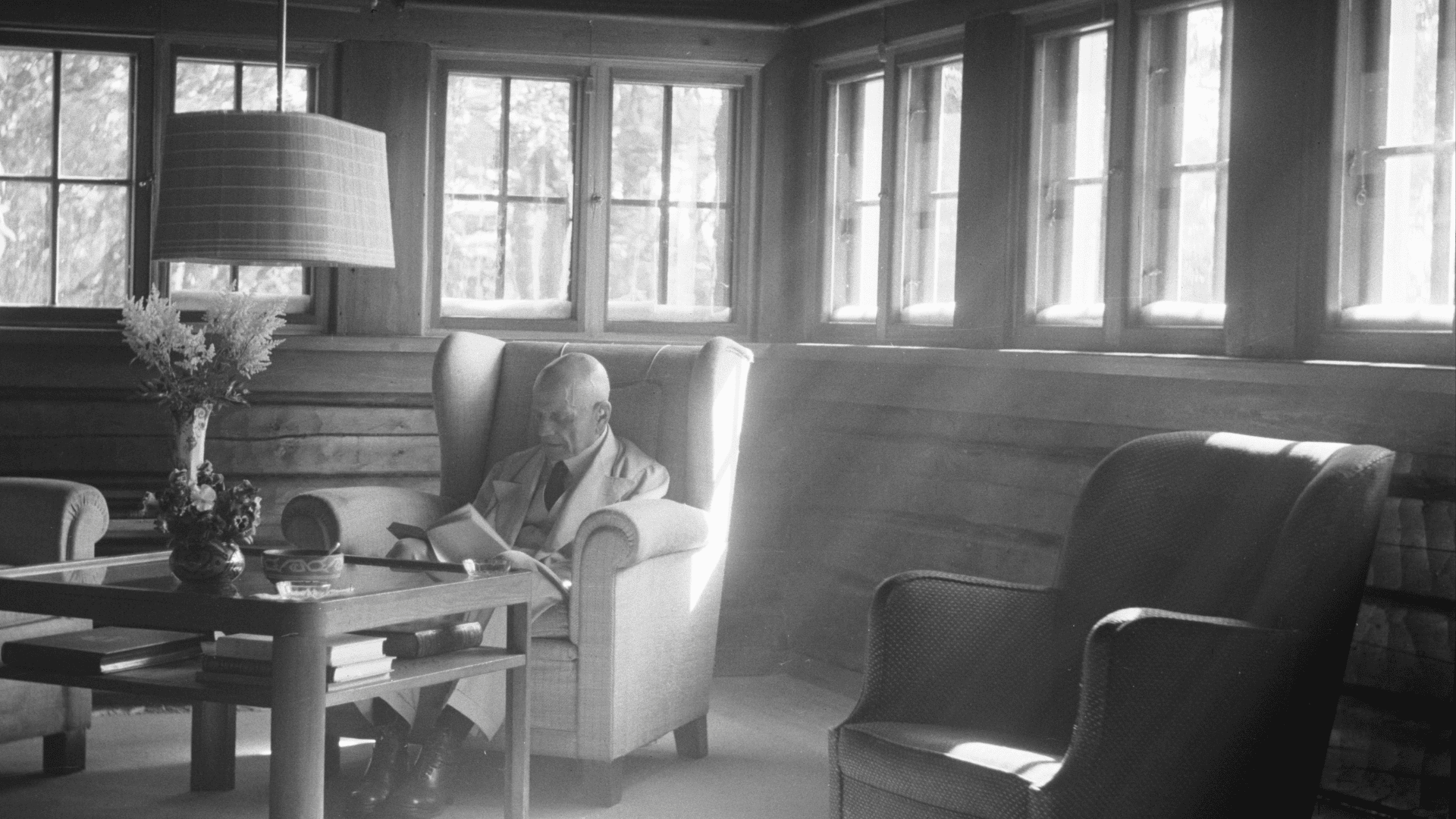
The German social critic Theodor Adorno, who lived in the 20th century, was not known to be a great fan of Jean Sibelius’ music. As a prime example, he cited the orchestral piece Valse triste, “harmless salon music,” which also achieved great popularity in Central European popular concerts. Such entertainment was evidence of the “fetishistic nature of music” and seriously undermined Sibelius’s reputation as a serious composer.
The debate about the role of music as art and entertainment continues, and Adorno’s role in this debate is still significant. However, in Sibelius’s case, he was completely off the mark. For Adorno, Valse triste was a standalone concert piece, even though its roots lie in the theater, in Arvid Järnefelt’s play Kuolema (Death).
Sibelius never composed a full-length opera, but stage music was an important form of expression for him. After moving from the tone poems of the 1890s to symphonic, “absolute” music, he still enjoyed working on plays in which symbolism flourished. Kuolema premiered at the National Theater in Helsinki on December 3, 1903, and it was quite natural for Järnefelt to ask his already famous brother-in-law to compose the music for it.
The original incidental music consisted of six numbers, including two songs by the main characters, Paavali and Elsa. Sibelius adapted Elsa’s song and the Andante section, in which a flock of cranes brings the couple a child, into the Scene with cranes, Op. 44/2. The clarinets, echoing their lines above the peaceful strings, truly bring to mind the cries of cranes.
In 1911, Järnefelt adapted his play for a new production. At the end of the completely rewritten middle act, the maidens dance around their beloved in the courtyard. Sibelius probably used his Canzonetta, composed in 1906, which suited the mood of the scene perfectly. The melancholic string orchestra piece also appealed to Igor Stravinsky, who arranged it for two clarinets, four French horns, harp, and double bass in 1963.
Valse triste was created as music for the first act of the play according to Järnefelt’s precise instructions: “The quiet playing of a violin orchestra begins to be heard, which, with the light, becomes clearer and finally forms a gentle, flowing waltz melody. ( . . . ) Finally, [the mother] grows tired and, almost unconscious, leans against the wall. The music then also quietens down ( . . . ) In her terror, she makes a violent effort and, accompanied by the renewed music, begins to dance again. ( . . . ) A knock on the door, three times, sparsely.” The play’s protagonist, Paavali, witnesses his mother’s death.
Sibelius followed the script perfectly – not to create salon entertainment, but to bring Järnefelt’s symbolist theatrical scene to life through music. Through a Finnish publisher, the score ended up in the hands of Breitkopf & Härtel and began to spread around the world in various versions published by the major publishing house. The composer did not receive any income from this success before the current copyright laws came into force, but he enjoyed conducting the piece throughout his career as a conductor, often as an encore requested by the audience.
When searching for a successor to Sibelius among Finnish composers, Einojuhani Rautavaara is a strong contender. Sibelius himself was allowed to choose the recipient of the Koussevitzky Foundation scholarship celebrating his 90th birthday in 1955, and the choice fell on the then 27-year-old Rautavaara. The young composer studied at the Juilliard School in New York and went through an avant-garde phase before settling on a more serene style.
In his later years, Rautavaara became known especially for his compositions involving angelic themes. His seventh symphony, Angel of Light, completed in 1994, achieved enormous popularity in the United States and laid the foundation for the composer’s international reputation. However, the series began as early as 1978 with the orchestral work Angels and Visitations.
The inspiration for the work came from the lines of Rainer Maria Rilke’s first Duino Elegy: “…und gesetzt selbst, es nähme mich einer plötzlich ans Herz, ich verginge von seinem stärkeren Dasein” (…and if [an angel] suddenly took me into its heart, I would fade away into that stronger being). Rilke’s angels are not winged, glossy figures, but beings who introduce us to the horror of existence. Rautavaara returned to the same poem in his 1994 choral work Die erste Elegie.
The mood of the orchestral work Angels and Visitations fluctuates between mystical peace and dramatic outbursts. The string patterns sizzle, the harp punctuates with capriciously bending notes, and the woodwind replies have a chorale-like tone. Echoes of the childhood dreams that inspired Rautavaara can also be heard in the musical storytelling.
At the beginning of the 20th century, Jean Sibelius sought to enrich his characteristically national romantic style. The gloom and defiance of his First Symphony was counterbalanced by his Symphony No. 2 in D major, Op. 43, which matured under the Italian sun.
As was often the case with the composer’s works, Symphony No. 2 took a long time to mature. One of the themes in the finale was already included in an improvisation heard at the christening of Akseli Gallen-Kallela’s son in Ruovesi in 1899. The themes of the second movement took shape while Sibelius was living with his family at their residence in Rapallo, Italy, in the spring of 1901. The symphony was premiered under the composer’s baton in Helsinki on March 8, 1902, and the final version was conducted for the first time by Armas Järnefelt in Stockholm in 1903.
Symphony No. 2 radiates light from its very first bars. The gentle theme presented by the strings contains a motif of three ascending notes that recurs throughout the work. The woodwinds respond with their own pastoral theme, and the French horns respond with a whisper. From this point on, Sibelius demonstrates his originality: instead of the traditional sonata form, fragmentary pieces fall into place, gradually revealing the entire structure of the first movement. After a series of turbulent phases, the gentleness of the beginning returns.
Sibelius associated the beginning of the Andante movement with the character of Don Juan, who is awaiting the arrival of his stony guest – the avenging ghost. He wrote the word “Christus” above one of the theme sketches. The stormy and dramatic movement is followed by a lively scherzo, the end of which leads to one of the most magnificent climaxes in Sibelius’s symphonies. The motif of rising notes forces the music into ever greater fervor until the heroic final theme arrives. The trumpets respond to the strings with a fanfare that heralds a festive march.
But the composer has prepared us for a long journey. According to Aino Sibelius, the tragic theme presented by the oboe was composed in memory of her sister Elli, who committed suicide (and who was also the sister of Arvid Järnefelt, who was writing his play Kuolema (Death) at the time). What follows is a seemingly endless journey towards the light, which is ultimately rewarded with the return of the final theme and a heroic ending.
Some works are aesthetically or art-historically significant, but few have such societal significance as Jean Sibelius’s tone poem Finlandia, Op. 26. The work was originally composed as the finale for the Press Days festival, in which “Finland awakens” to its status as an independent nation.
“Finland,” “The Awakening of Finland,” “Vaterland” and “La Patrie” were the names given to the work, which instantly became popular and was performed both in Finland and on the Helsinki City Orchestra’s European tour, until Sibelius’s secret admirer and patron Axel Carpelan suggested the name Finlandia.
If the popularity of the entire work is already staggering, the enthusiasm aroused by the hymn taken from the end of the work is even more so. In addition to the lyrics approved by the composer, written by Wäinö Sola and V.A. Koskenniemi – the latter is known today as the Finlandia hymn – it has been sung under names such as “Be Still My Soul,” “At the Table,” “Dear Friend of Mine,” “Land of the Pine,” “Christian Life,” and “Our Farewell Song.” The short-lived state of Biafra adopted the hymn as its national anthem in 1967 under the name “Land of the Rising Sun.”
As music, Finlandia does not follow the same ethos as its composer’s symphonies, whose motivic connections between musical themes compel them to form organic wholes. But Sibelius did not disparage his work either, as it is full of captivating, dramatic twists and turns, and the anthem itself forms a linear, magnificent arc. Although he agreed to the lyrics for the hymn, Sibelius did not approve of just any version, as is evident from an interview he gave in 1931: “I was once asked for permission to jazz up ‘Finlandia’. I replied that I was deeply offended by such a question.”
Lauri Mäntysaari
In collaboration with

Artists
INFO
- Address: Aninkaistenkatu 9, 20100 Turku
- Public Transport: All stops at the city centre are nearby. The bus terminal is nearby and Turku main railway station approx. 1 km away.
- Accessibility: Accessible parking (2 spots) on Sibeliuksenkatu. Temporary stopping for dropping off passengers is allowed in front of the main entrance on Aninkaistenkatu. The main entrance is accessible.
- Parking: Parking areas at the city centre. Puutori car park is recommended.